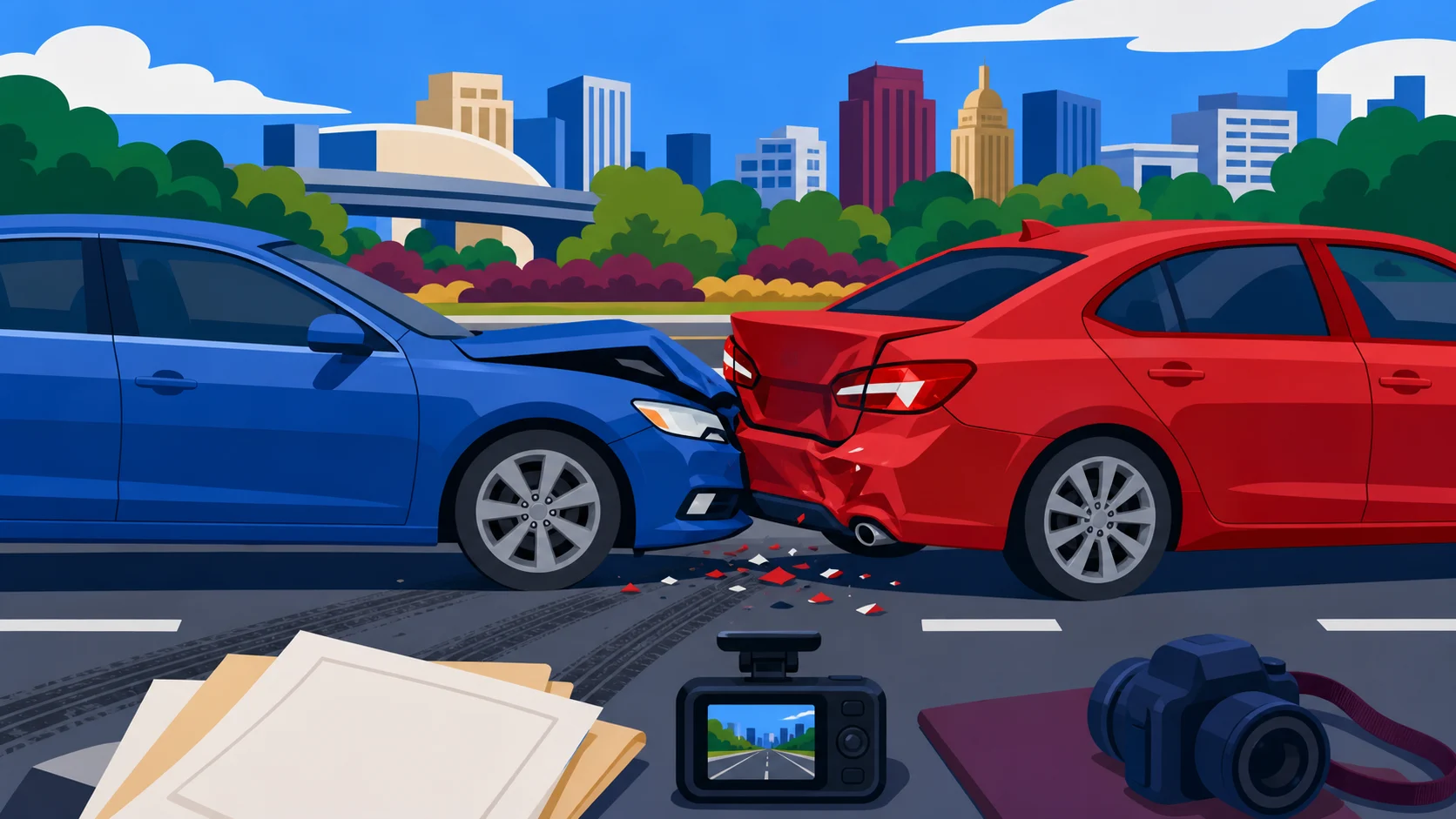
A rear-end collision may look straightforward from the shoulder of the road. One vehicle has front-end damage, the other has rear-end damage, and the following driver may receive a citation. But an injury claim still turns on evidence: how closely the vehicles were traveling, whether traffic was slowing, whether a stop signal was given when possible, whether there was more than one impact, what the vehicle damage shows, and whether the crash caused the claimed injuries.
Mississippi law does not reduce every rear-end crash to an automatic rule. The following driver has an important duty, but insurers may still dispute fault, causation, medical treatment, or damages. This guide explains how the rules and evidence fit together.
The Short Answer
Mississippi Code Section 63-3-619 says a driver must not follow another vehicle more closely than is reasonable and prudent, considering vehicle speed, traffic, and highway conditions. Section 63-3-707 separately says a driver should not stop or suddenly decrease speed without an appropriate signal to the driver immediately behind when there is an opportunity to give one.
Those statutes matter, but neither makes the police report or vehicle position the whole case. A rear-end claim may involve a sudden traffic backup, a disabled brake light, a lane change immediately before impact, a chain reaction, a second collision that pushed one car forward, weather, roadway debris, or competing accounts of what happened. Mississippi's comparative-negligence rule can also reduce a recovery when more than one person contributed to the crash.
The practical approach is to preserve objective proof and avoid assuming the insurer will accept its driver's fault.
Mississippi's Following-Distance Rule
Section 63-3-619 does not set one following distance for every passenger vehicle. It uses a flexible standard: reasonable and prudent under the circumstances. That means the safe distance can change with:
- traffic speed and congestion
- rain, fog, darkness, or glare
- road surface and construction conditions
- curves, hills, and sight distance
- vehicle size, weight, and braking ability
- the time reasonably needed to perceive a hazard and stop
An insurer investigating the following driver may examine speed, braking, distraction, visibility, tire marks, event data, and the distance available before impact. A citation for following too closely may be relevant, but the civil claim still requires a full evaluation of admissible evidence, fault, causation, and damages.
The lead vehicle's conduct can also be disputed. Section 63-3-707 addresses signaling before a stop or sudden decrease in speed when there is an opportunity to signal. That does not mean a driver must continue through a red light, strike a pedestrian, or avoid emergency braking. It means the facts surrounding the stop, available warning, brake-light operation, and traffic conditions may matter.
Why the Rear Driver Is Not Automatically the Only At-Fault Driver
The following driver is often primarily responsible because drivers are expected to maintain enough space to react to ordinary traffic changes. Still, a rear impact does not prevent evidence of shared fault or another responsible party.
Common disputes include:
- Unsafe lane changes. A vehicle may enter a lane too close to the vehicle behind and brake before a safe following distance can be reestablished.
- Brake-light problems. Inoperative or obscured brake lights may affect what warning the following driver received, although the driver still has a duty to maintain a proper lookout and safe distance.
- Unexpected roadway conditions. Debris, standing water, construction, or a prior collision may create a sudden hazard.
- Multiple impacts. A third vehicle may strike a stopped car and push it into the vehicle ahead.
- Commercial-vehicle factors. A truck's weight, stopping distance, maintenance, load, and driver records may become relevant.
- Vehicle defects. A brake, tire, or other mechanical failure may require inspection and preservation before the vehicle is repaired or destroyed.
Mississippi follows comparative negligence under Section 11-7-15. Partial fault does not automatically bar an injury claim, but damages may be reduced in proportion to the negligence attributed to the injured person. That is why a fair investigation should determine the impact sequence and each driver's conduct rather than rely on a slogan about who is always at fault.
The Most Useful Evidence After a Rear-End Crash
The best evidence is often created or preserved in the first hours and days. Useful material may include:
- photographs showing all sides of every vehicle, not only the damaged bumpers
- wide scene photographs showing lanes, traffic controls, curves, sight lines, and final positions
- dash-camera, business-surveillance, doorbell-camera, or traffic-camera footage
- witness names, phone numbers, and observations
- the crash report number and investigating agency
- tow-yard, repair, total-loss, and vehicle-inspection records
- debris, paint transfer, crush patterns, and damage height
- event-data-recorder or other electronic vehicle data when available
- phone records or other lawfully obtained distraction evidence
- weather, lighting, and roadway-condition information
Take photographs before repairs whenever possible. A bumper cover can hide internal damage, and a later repair may remove evidence of impact location or severity. Do not discard a dash camera or allow relevant footage to overwrite. If a nearby business may have video, identify it promptly; retention periods vary and some systems erase recordings quickly.
The police report is a useful starting point, but it may contain incomplete information or summarize statements the officer did not personally observe. Photographs, video, physical damage, witness accounts, and electronic records may clarify or contradict an early report.
For a broader evidence checklist, read What to Do After a Car Accident in Mississippi.
Chain-Reaction Rear-End Collisions
A multi-vehicle crash requires an impact-by-impact timeline. The questions may include:
- Which vehicle made the first contact?
- Was a vehicle already stopped before it was struck?
- Did one impact push a vehicle into another?
- Did a later impact cause additional injury or damage?
- Were the vehicles traveling in one lane or changing lanes?
- Which drivers had time and distance to react?
Damage patterns can help. A vehicle with both front and rear damage may have struck the vehicle ahead before being hit, or it may have been pushed forward while stopped. Witnesses, synchronized video, event data, occupant accounts, and repair measurements can help distinguish those sequences.
More than one liability policy may apply, and more than one person can share fault. When the number of injured people or the severity of injuries exceeds available coverage, uninsured or underinsured motorist coverage may also matter. See Uninsured and Underinsured Motorist Coverage in Mississippi for the broader framework.
Medical Proof Still Matters
Even when the insurer accepts that its driver caused the collision, it may dispute whether the crash caused a particular injury or whether all treatment was reasonable and necessary. Rear-end impacts can produce different medical outcomes depending on speed change, vehicle structure, seating position, prior conditions, and the individual involved. Legal proof should follow the medical records rather than assume that visible vehicle damage measures injury by itself.
Preserve:
- emergency-room, urgent-care, primary-care, specialist, therapy, and imaging records
- medical bills and explanation-of-benefits forms
- referrals, prescriptions, restrictions, and follow-up instructions
- photographs of visible injuries when appropriate
- missed-work records and written work restrictions
- receipts for medication, equipment, travel, or replacement services
- records explaining a treatment interruption, if one occurs
Do not exaggerate symptoms, but do not minimize them in an early recorded statement before the medical picture is clear. Describe what you know, identify what is still developing, and follow appropriate medical advice.
The at-fault driver's insurer generally does not pay each bill while treatment is underway. Health insurance, MedPay, government benefits, workers' compensation, provider arrangements, or the patient may address bills first, depending on the facts. Reimbursement and lien claims may later affect the net recovery. Read Medical Bills After a Mississippi Car Accident for more detail.
Insurance Statements and Early Settlement Offers
An adjuster may call soon after the collision. Before giving a recorded statement, determine whose insurer is asking. You generally do not have a contractual duty to provide a statement to the other driver's liability carrier. Your own policy is different because it may require cooperation for collision, MedPay, uninsured or underinsured motorist, or other first-party benefits.
Do not ignore your insurer. Review the policy and request, respond truthfully, and avoid guessing. A broad medical authorization, property-damage release, bodily-injury release, or early settlement can affect rights beyond the immediate repair bill.
An early offer may arrive before the diagnosis, treatment plan, wage loss, liens, policy limits, or future effects are known. Evaluating the offer requires more than comparing it with current bills. For additional context, read What the Insurance Adjuster Won't Tell You After a Mississippi Accident.
What to Do After a Mississippi Rear-End Accident
If you can do so safely:
- Move out of active traffic and call 911 when anyone is hurt or the roadway is blocked.
- Get medical care based on your symptoms.
- Exchange driver, vehicle, and insurance information.
- Photograph every vehicle, the roadway, traffic controls, debris, and visible injuries.
- Identify witnesses and possible camera locations.
- Save the crash report number, tow information, claim numbers, and medical paperwork.
- Preserve dash-camera footage and avoid repairing or disposing of important evidence before it is documented.
- Do not admit fault, speculate, or post detailed crash and medical commentary publicly.
- Review any statement, authorization, or release request before signing it.
If the driver leaves instead of remaining at the scene, preserve any vehicle description, direction of travel, partial plate number, debris, and camera lead. The evidence and insurance analysis may be different; see the firm's Jackson hit-and-run accident guide.
Filing Deadlines and Earlier Evidence Deadlines
Mississippi's general limitation period for many negligence and personal-injury claims is three years under Section 15-1-49. Different rules may apply when the claim involves a government entity, medical negligence, a minor, a death, or another special circumstance. Insurance policies may also impose notice and cooperation duties.
The filing deadline is not the only clock. Video may be overwritten, vehicles repaired, witnesses lost, and electronic data deleted much earlier. Treat the paperwork and evidence as time-sensitive and obtain advice promptly rather than relying on a general deadline. The broader deadline framework is explained in Mississippi's Personal Injury Statute of Limitations.
Mississippi Rear-End Accident FAQ
Is the rear driver always at fault in Mississippi?
No automatic rule decides every claim. Section 63-3-619 requires a reasonable and prudent following distance, so the following driver is often primarily responsible. But lane changes, brake-light issues, emergency conditions, multiple impacts, road hazards, and comparative fault can affect the analysis. The evidence should establish what happened in the particular crash.
What if the front driver stopped suddenly?
Section 63-3-707 addresses signaling before a stop or sudden decrease in speed when there is an opportunity to signal. The reason for the stop matters. A driver may need to brake for traffic, a signal, a pedestrian, or an emergency. Investigators should consider brake-light operation, traffic conditions, available reaction distance, video, witnesses, and whether the following driver maintained a proper lookout.
What if I was pushed into the car ahead?
That fact can materially change the impact sequence. Preserve photographs of both the front and rear damage, obtain witness information, and identify any video. A vehicle that was stopped and pushed forward presents a different fault question from a driver who first struck the vehicle ahead and was then hit from behind.
Does minor vehicle damage mean there cannot be an injury?
No single damage photograph decides medical causation. Insurers may compare repair records, impact evidence, medical history, symptom timing, diagnoses, and treatment. The injury claim should be supported by medical records and the complete crash evidence, without exaggerating either the collision or the symptoms.
What if I share some fault?
Under Mississippi Code Section 11-7-15, partial fault does not automatically bar recovery. Damages may be reduced in proportion to the negligence attributed to the injured person. Objective evidence becomes especially important when the drivers dispute a lane change, sudden stop, distraction, or impact sequence.
How much does a rear-end accident consultation cost?
Sheppard Law Firm offers free personal-injury consultations. Personal-injury cases are handled on a contingency fee, meaning the attorney's fee is contingent on a recovery. The percentage, case expenses, and other terms are stated in a written fee agreement before representation begins.
Talk With a Mississippi Car Accident Lawyer
Sheppard Law Firm represents people injured in rear-end and other vehicle collisions in Jackson and across Mississippi. The firm reviews crash evidence, disputed fault, medical proof, insurance coverage, settlement demands, and litigation when a fair resolution is not offered.
If your concern is an inaccurate crash report, see our Mississippi crash report error page.
Start a Mississippi injury case review. You can also learn more about the firm's Jackson car accident representation or call 601-688-4110.